Sunday, May 11, 2008

Blurbity Blurb Blurb - Inside (2007)


Touted as the anti-Juno, the French horror flick Inside examines some of the inner-workings of the female mind through pregnancy via a life and death battle between two women. It's possibly the goriest film I've ever seen (and I've seen plenty, trust me) and it all takes place inside the home, using traditional female objects like sewing scissors and hair styling products to commit the acts of violence. I'm not easily manipulated by horror films because I've seen so many, but this film really got to me and I can't believe it's only eighty-two minutes long because it's so effective.

Check out some of the images:


Wednesday, May 7, 2008

Tina Fey wants a Bebe...


And I don’t know why.

Neither does she, apparently. Baby Mama begins with an informative voiceover heard over blank credits from Fey’s Kate Holbrook explaining how she managed to succeed in the male-driven business world. She attests (slightly paraphrasing): “I wore the short skirts,” “I let the old men cop a feel during business lunches” and then suddenly - - “I woke up one morning and felt like all the babies on the street were staring at me,” and goes on and on about how much she wants a baby. For comedic effect, the first real image we see is of Fey sitting at a dinner table with a man who obviously looks disturbed by the wealth of information just thrown at him. “Too much for a first date?” Fey asks.

So begins Baby Mama - a film with all of the bells and whistles of a grade-A female comedy that has too many balls and not enough bite to make it soar.

I hate to sectionalize films with trite remarks like “the first third of the movie was good, but the middle act and half of the climax sucked” because, well, it’s useless. However, Baby Mama warrants this type of criticism because there is a clear-cut distinction between the scenes in which Tina Fey and Amy Poehler are alone in their wondrous, pregnant universe and basically the rest of the movie when either or both of the ladies step outside and interact with the men of their worlds.

When Amy Poehler moves into Tina Fey’s apartment after she leaves her boyfriend, the movie takes an uplifting turn that kicks it up a few more notches than it actually deserves. As I pointed out in my quarterly review, few films allow women to have actual friendships that don’t involve catty, petty motives or some steak knives buried in shoulder blades. Baby Mama allows Tina Fey and Amy Poehler to be friends - to support one another, laugh, cry, and play the American Idol video game incessantly. They create their own loving, nurturing nest inside their environment. So much so, that certain people in the movie think they’re in a lesbian relationship. And, oddly enough, Fey and Poehler don’t really disagree. I don’t think I’ve seen such good chemistry between two women since Susan Sarandon and Geena Davis appeared together in Thelma and Louise (1991). They’re really fun to watch on screen together.

If the film had been written and/or directed by Ms. Fey as it should have, there’s no doubt in my mind that it would be ten times more clever and empowering than it is right now. I’m not one for television, but I’ve recently joined the Tina Fey bandwagon and can’t wait to see where she goes next with her career. She’s one of the few recognizably female powerhouses in the industry who is frequently lauded and applauded for her work. And, Amy Poehler, for that matter is an up and coming talent behind the scenes, having just created her own animated series called The Mighty B.

And those are the precise reasons the rest of Baby Mama is such a startling disappointment. About half-way through the running time, the film takes an out-of-nowhere turn for the worse by turning Amy Poehler’s character into one of those wenches who had intended to stab her friend in the back. For no reason! That plot point unravels the rest of the girl-power progress the film had been making with the Poehler/Fey relationship and quickly regresses in the opposite direction. By the end of the film they’re still friends, but each woman is paired off and stuck with a simpering infant to take care of. No one bothers to point out if Fey is still a high-powered business woman or if Poehler got her act together and went to college.

Another major problem I have with the film is its take on surrogacy and any sort of baby-making process other than that of the biological. Tina Fey can’t get pregnant via artificial insemination because she has a T-shaped uterus. She can’t adopt a child because she would be a single parent and they don’t like those. She opts to pay $100,000 for a surrogacy with Amy Poehler because it’s her only option. However, and I don’t want to give away any plot points, but the movie paints surrogacy as some sort of Alien invention by making the creator, Sigourney Weaver, of the agency Fey goes to as some eccentric loony-bin who can still get pregnant in her fifties. And, in case you’re wondering, there are plenty of jokes about that too.


**Spoiler**

When the surrogacy with Amy Poehler fails to work because of her own stupidity and Tina Fey gets knocked up the old fashioned way, the film is taking a conservative bend that is most unwelcoming. It’s saying “you can still get pregnant if you wait for the right man to come along.” Greg Kinnear’s penis must be the eight wonder if it can turn a thirty-seven year old T-shaped uterus into something workable. Movies like Baby Mama that deal directly with topics like different kinds of reproduction methods should be striving to depict these issues in a positive light or they won’t be taken seriously.

Bad Baby Mama. Bad. Bad.

Thursday, May 1, 2008

The Cyrus Complex


Which picture is more disturbing?


I’m sure everyone and their mother has heard about the Miley Cyrus Vanity Fair photoshoot by now. It’s gained a lot of controversy for the first picture because it supposedly depicts the latest role model/pop princess as a sexual being. The latter picture, included in the same article, is not being discussed at all. I’ll ask the question again – which picture is more disturbing?

The latter one is for several reasons. The first that springs to mind is obviously the fact that she’s entangled in her father’s arms in the same way several perfume/cologne ads (heck, just ads in general) feature men and women as sex objects to sell their product. Secondly, by not ackowledging and abhorring the father/daughter photo for the same reasons as the individual photo, society is proving, once again, that it’s perfectly alright to be a sexual object as long a man is in the picture. That, in my opinion, is abominable.

Miley Cyrus is a beautiful, young woman. The first picture, though somewhat provactive, captures her youth while simultaneously capturing her emerging maturity as the woman she will grow into being in a few years. It’s a stunning photograph that looks almost like a painted portrait. She’s wearing very little make-up and looks natural for a change. Miley Cyrus should not be ashamed of this photograph anymore than she should be ashamed of growing up. More importantly, she should not be afraid of expressing her sexuality. She's fifteen! Not eight, ten, or twelve. She's probably been on her period for a few years and entertained the idea of having a boy friend/girl friend by now.

And her fans, if they really are fans, shouldn’t try to box her into being the perpetual tween angel. She should be allowed to grow-up in front of our eyes. If society won’t let her do that, then we’ll have another case of Spears and Lohan. They weren’t allowed to grow into mature women because “we” loved that damn virginal box so much. We want everyone to keep creating the same work over and over again because we don't want to re-evaluate our connotations of who that person is. Famous people must stay the same. Both women ended up exploding inside of their boxes by reacting childishly to adult situations. I don't mean childishly in the sense that they're infantile and end up sucking their thumbs after a bad night out partying, but childishly in the ways that they handle responsibility, relationships, and temptations. They have no barriers given to them so they don't know how to form their own. I realize the stress of being famous and more importantly, staying famous must be incomprehensible, but that’s our fault, not theirs. We as a society should try to rectify our viewpoints on stardom so that we can continue to adore our childstars when they become adult sensations. Everyone should be allowed to grow.

Unfortunately, Miley Cyrus has copped-out and issued an apology:

"I took part in a photo shoot that was supposed to be 'artistic' and now, seeing the photographs and reading the story, I feel so embarrassed. I never intended for any of this to happen and I apologize to my fans who I care so deeply about."

Vanity Fair and Annie Liebowitz (the photographer of the shoot) have retorted that claim:
A spokesperson for Vanity Fair has defended the publication, saying:

"Miley's parents and minders were on the set all day. Since the photo was taken digitally, they saw it on the shoot and everyone thought it was a beautiful and natural portrait of Miley."

The article accompanying the pictures quoted Miley as saying the pictures are "really artsy. It wasn't done in a skanky way."

Annie Liebowitz:
"I'm sorry that my portrait of Miley has been misinterpreted," the celebrity photographer said in a written statement. "Miley and I looked at fashion photographs together and we discussed the picture in that context before we shot it. The photograph is a simple, classic portrait, shot with very little makeup, and I think it is very beautiful."


I must say, Vanity Fair and Annie Liebowitz are handling the situation beautifully. I also love that VF's official website has an essence of snarkiness coursing through its HTML encoded veins about the ridiculousness of this controversy as well.

Wednesday, April 23, 2008

Nim's Island

Nim's Island (Jennifer Flackett, Mark Levin)

Despite a very clichéd ending, Nim’s Island proves to be, for the most part, a positive representation of the girl adventure film. Abigail Breslin’s Nim is a fun, frolicking, and fierce little gal who cannot only save her island from tourists and help her father with his lab experiments, but can also connect to another slightly ambiguous older woman, namely Jodie Foster’s Alex Rover - a character I’m guessing is supposed to emulate J.K. Rowling.

Foster’s Rover has given her own name to the male main character in a series of adventure books she created, which gives the film a wonderful duality in two ways - one, Foster’s Rover suffers from agoraphobia and uses the male character to explore the world for her. Two, the film uses that misogynistic overtone for its feminist advantage - the male character Alex Rover springs to life from the real Alex Rover’s imagination and encourages her to leave the household and take care of her own life. One could also say that Nim’s Island is the watered-down, Hollywood version of Gilliam’s Tideland in that it depicts a little girl thrown into a situation beyond her supposed mental years and somehow (notice the sarcasm) manages to thrive in that environment.

It should also be noted that Nim’s Island is one of the few female-driven films I’ve seen this year that has its production roots deeply embedded in female filmmakers. It’s co-directed by a woman, produced by a woman, the book it’s based upon is written by a woman, and two of the four screenwriters are women. Though the films of Hayao Miyazaki still own my heart as far as girl adventure films go, I’m happy to say that Nim’s Island provides a positive, mostly empowering outlet for girls of all ages.

Tuesday, April 22, 2008

Girls Rock!

Girls Rock! (2007, Arne Johnson and Shane King)


During the summer of 2005, two male filmmakers (Arne Johnson and Shane King) ventured into the very female world of rock ‘n’ roll camp for girls - a one week program in Portland, OR for eight to eighteen year olds to learn how to rock their hearts out with instruments and roll into supreme self-confidence.

The purpose of both the documentary and the camp itself is to set a positive example for girls who are growing up in the putrid pop era of Britney Spears, Jessica Simpson, and Kelly Clarkson - gals who reinforce all the negative stereotypes that the likes of PJ Harvey, Alanis Morrisette, and Fiona Apple tried so hard to eliminate in the previous musical generation. In the one week they’re at the camp, girls are given the learning tools of not only how to read music and play a guitar properly, but are also taught the connotations of the self-image and how important it is to have a good one. The gals’ are educated on confidence (how to use your physical space and voice), self-defense techniques (no means no!), women’s history (the great female rockers of the past), and the value of female community (how to interact with other women on a non-bitchy level). At the end of the camp, all of these ideas culminate into one concert where all of the bands formed at the camp perform in front of hundreds of people.

The filmmakers utilize statistics on young women (which all basically sum up to - girls are in trouble!), interviews with the amazing camp counselors (all women), and one-on-one discussions with the female protagonists themselves - Laura (age 15), Misty (age 17), Amelia (age 8), and Palace (age 7) to show us the utter positivity the camp bestows for young girls everywhere. All of these girls are bright, spritely, and talented young women who definitely experience positive outcomes because of the ideas taught to them at camp. Their music is heart-felt, in-your-face, and often funny - my favorite song was created by Palace and it's entited "San Francisco Sucks!" By focusing on four distinct girls with varied backgrounds within a camp full of hundreds, the documentary further proves how important it is for young women to have the skills rock ’n’ roll camp sets-up because it clearly shows that all women are being affected by the poor state of femininity in the media in one way or another.


By acting as a catalyst for all of fury being built up by young women everywhere, Girls Rock! really and truly succeeds in its mission to help give young girls the minds -- and voices to enter the world of female adulthood with a clear-minded perspective on how to be an empowered woman.

I simply cannot ask for more.

Since 2005, rock ‘n’ roll camp has branched out significantly. There are now camps all over the U.S. and there are more making their debut in Europe and South America. The documentary is making the rounds at festivals (I saw it at the Wisconsin Film Festival) and theatrical venues throughout the country. You can read more about it on their official website.

I can’t recommend this film highly enough. Girls Rock! is certainly my favorite female flick of 2008 thus far and I can’t wait to buy copies of the DVD for my nieces, cousins, and, of course, myself when it comes out in September. You can pre-order the DVD on the official website and, just so you know, all of the proceeds will go to female-driven charities.

Rock on, ladies!

Sunday, April 13, 2008

She keeps her own name, motherfuckers!


This is pretty darn funny.

Yeah, yeah...I'm working on three reviews (Teeth, Girls Rock!, and It's a Free World...) and doing some other feminist film fun stuff, but until I'm done, enjoy this!

Thursday, April 10, 2008

Female Filmmakers


Hey y'all,

I'm busy and sick. Not a good combination. But here is a list of female filmmakers I've made! I've separated them into categories regarding their over all talent as filmmakers who bring forth feminist themes into their films. Enjoy!


Great

Chantal Ackerman (1950-present, Belgium)- Born in Belgium in 1950, Ackerman has created forty-two movies for either film or television. Her films utilize avant-garde aesthetics to create deeply personal material. She currently has a DVD box set of her work released that features a significant portion of her filmography, including the wonderful News from Home (1976) and Hotel Monteray (1972).

Dorothy Arzner (1897-1979, U.S.)- The first female filmmaker inducted into the DGA. She led one hell of a life and created approximately twenty feminist films between 1927 and 1943. You should see Dance, Girl, Dance (1940), Craig's Wife (1936), the predecessor to the Joan Crawford film, Harriet Craig (1950), and Christopher Strong (1933).

Sadie Benning (1973-present, U.S.)- Daughter of famous avant-garde filmmaker James Benning. Her videos, which she started creating in her early teens exhibit feminist themes and often deal with gender roles and queer cinema ideals. Look for It Wasn't Love (1992) and The Judy Spots (1995).

Jane Campion (1954-present, New Zealand)- One of the most famous female filmmakers of contemporary cinema. She entered into the American mainstream in the early 1990's when she directed the Oscar hit, The Piano (1993). She has been making films since the early 1980's starting with such short classics as Passionless Moments (1983) and working her way into longer films like Sweetie (1989) and An Angel at My Table (1990). Following The Piano, Campion made three features - The Portrait of a Lady (1996), Holy Smoke(1999), and, most recently, In the Cut (2003). Since 2003, Campion has returned to her roots by making short films. Her next feature is set to come out in 2009 entitled Bright Star - a film about the relationship between John Keats and Fanny Brawne. Campion is one of three female filmmakers to be nominated for a best director Academy Award.

Sofia Coppola (1971-present, U.S.)- Despite the fact that she only has three features to her name - The Virgin Suicides (1999), Lost in Translation (2003), and Marie Antoinette (2006) and is the daughter of one of the most revered American directors of all time, Sofia Coppola has successfully made a name for herself with film-going audiences. All three of her films thus far have dealt with the inner-isolation of the female mind and what it feels like to be a young woman thrown into a situation beyond comprehensible reasoning, all amounting to the advent of womanhood in the forms of puberty, living in a foreign country, and becoming the ruler of one of the most prominent countries in the world. She is also one of the three female filmmakers to be nominated for a best director Academy Award.

Su Friedrich (1954-present, U.S.)- Avant-Garde film/videomaker Su Friedrich creates diary documentaries that, for the most part, revolve around her own life and family members. I highly recommend Hide and Seek (1996), Sink or Swim (1990), and The Ties that Bind (1984.)


Alice Guy (1873-1968, France)- Silent cinema filmmaker Alice Guy is probably the world's first female filmmaker. She created nearly three hundred films during her lifetime, most of which were produced under her own production company, Solax Film. Though a large portion of her work is long-forgotten and unrecoverable, a few of her shorts exist on compilations like the American film archives (where you can find her film, Falling Leaves (1912) and The Movies Begin box set (where you can find Making an American Citizen (also 1912.)

Miranda July (1974-present, U.S.)- She made a splash with the indie crowd in 2005 with her film - Me, You, and Everyone We Know, which is also her most recent venture. She has a total of four films to her name and all of them seem to encapsulate that rare adult-yet-child-like sense of whimsy that audiences fell in love with when they watched Me, You, and Everyone We Know.

Ida Lupino (1914-1995, U.S.)- Feminist actress turned feminist filmmaker, Ida Lupino made a handful of Hollywood films during the late portion of the golden age and turned to television when it became popular. She rocks the feminist house as both an actress and as a filmmaker. Only two of her films are available on DVD - The Hitch-Hiker (1953) and On Dangerous Ground (1952) - a film she both acted in an did an un-credited directing job when Nicholas Ray stepped out of the picture.

Marie Menken (1909-1970, U.S.)- Andy Warhol actress and director of several short experimental films, Marie Menken is regarded as American avant-garde royalty in all the right circles. As far as I know, only one of her shorts, Visual Variations on Noguchi (1945), is available on DVD through Kino's Avant-Garde vol. 2. She is also supposedly the basis for the character of Martha in Albee's Who's Afraid of Virginia Woolf?

Lynne Ramsay (1969-present, Scotland)- Thus far, she's created three short films, Kill the Day (1996), Small Deaths (1996), and Gasman (1997). Ramsay has also directed two feature length films - Ratcatcher (1999) and Morvern Callar (2002). Her films exude this sort of listless, dream-like quality that center around several horrific events in her main characters' lives, causing seemingly violent acts like chopping up a dead body into tiny pieces to become strikingly beautiful.

Adrienne Shelly (1966-2006, U.S.)- She could have been one of the best female filmmakers of the twenty-first century if she hadn't been violently murdered for no reason in November of 2006. Waitress, her third feature since she started directing in the early 1990's, encompasses everything positive about womanhood in cinema. Though I only knew of her a short time before she died, I will nevertheless continue to tout her name to anyone who will listen to me. She got her start in the industry as part of the Hal Hartley indie crowd, which eventually led to creating her own material. In her short career as a director, Adrienne Shelly made three short films and three features.

Julie Taymor (1954-present, U.S.)- The great narrative visualist female filmmaker of contemporary cinema. Her roots lie in theatre and her love lies in the work of Federico Fellini, which shows greatly in her body of work. She's made three TV films - The Tempest (1986), Fool's Fire (1992), and Oedipus Rex (1993) and three feature length films - Titus (1999), Frida (2002) and, most recently, Across the Universe (2007.) I can't wait to see what images she can create if she were to work from her own screenplay.

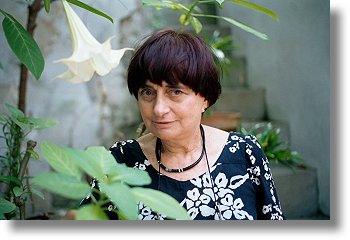
Agnes Varda (1928-present, Belgium)- Best known for her films Cleo from 5 to 7 (1962) and Vagabond (1985), Varda is regarded as one of the sole female filmmakers of the French New Wave film movement. Since 1954, Varda has directed 45 films and/or television programs and is currently in post-production for her own autobiographical film, which is set to be released later this year.

Good

Allison Anders
Katherine Bigelow
Catherine Breillat
Zoe Cassavetes
Vera Chytilova
Tamra Davis
Catherine Hardwicke
Mary Harron
Amy Heckerling
Patty Jenkins
Kasi Lemmons
Mira Nair
Kimberly Peirce
Sally Potter
Sarah Polley
Liv Ullman

Mediocre

Nora Ephron
Callie Khouri
Penny Marshall
Nancy Meyers
Betty Thomas