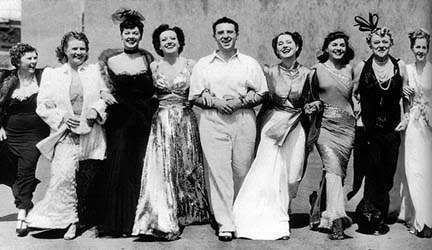
"There is a name for you, ladies, but it isn't used in high society... outside of a kennel." - Crystal Allen, The Women (1939)

When Clare Booth Lace wrote The Women in the mid ’30s, she had one main objective: to satirize the hell out of all the rich, petty women surrounding her in high society. Ms. Booth Lace worked for a living, married an intellectual equal, and only joined in on the malicious sewing circle of death out of sheer curiosity and disbelief. She found that the female upper crust managed to avoid mass suicide by stockpiling up on soap opera shenanigans in order to keep life interesting. Tabloid affairs, catfights, and pop fashions added the spice while gossip, lunches, and parties added fuel to the fire. No one really liked each other and yet they were always together, flitting about like ruffled hens in a barnyard. Clare Booth Lace saw the dramatic and comedic potential in satirizing their lives as well as knocking the bourgeois down a peg or two at the height of the economic crisis. Needless to say, the all-female play she ended up writing was a smash hit and MGM quickly nabbed the rights to the story in 1938.
After being fired from Gone with the Wind (despite filming its best scenes) famed woman’s picture director, George Cukor, stepped on the set of The Women and immediately got to work. Jane Murfin and Anita Loos, who penned Gentlemen Prefer Blondes, adapted the play for the screen and “jazzed up its lingerie” with naughty sexual innuendo. Together, Cukor, Loos, and Murfin faithfully brought the story of Mrs. Stephen Haines (Mary), a darling, rich housewife whose life is turned upside down when her husband has an affair with a perfume salesgirl, to life with all of the zest and zing of the original play. The film starred Norma Shearer as Mary, who was finally free of creative restrictions because her husband, producer Irving Thalberg had died that year. It also starred the adorably gawky Rosalind Russell as catty Sylvia Fowler, Joan Crawford as sultry perfume girl Crystal Allen, and Joan Fontaine and Paulette Goddard as two more hens in the hen house. These five ladies headline an entire female cast that delights as well as destructs. All bets were off with this throng.
 And yet, despite the scrumptious catharsis one feels while watching these dillies do their dallies, Cukor also manages to make us feel empathetic for their plights as well. He was the best woman’s picture director in the business because he, as a gay male working in the industry, understood the feeling of being an outsider housed in polite casings for mass consumption. Though he clearly dislikes most of the women in The Women, he still recognizes their own brand of persecution at the hands of patriarchy. For instance, if the film had been placed in the hands of any other director, I think the character of Crystal Allen would only have hit the “slut” note and backed away. Cukor admires her sexiness and daring for going after what she wants and he and Joan Crawford make her a three-dimensional character. Like Scarlett O’Hara, Crystal Allen isn’t afraid of ambition and hunts for success the only way she knows how: by conniving and clawing her way into a solid, wealthy marriage. I think the real threat she instills in the rich bitches around her isn’t that she’s going after Mary’s husband. No, they hate and tear her down because she uses those jungle red nails to grasp what they did once upon a time, except she’s doing it from a lower social status and succeeding all the same.
All of Cukor’s characters have that gray matter feel to them. The ladies’ start out at one extreme and gradually gravitate toward the middle of the spectrum by the film’s end. Though they’re all terrible people in one way or another, the film still manages to celebrate the camaraderie of the female soul through so many different types of powder puffed trixies. We don’t watch the film to see Mary get her husband back; we watch it to see women interact with one another on an even playing field that usually involves witty banter, fabulous clothes (Adrian is a saint), and equal doses of social backstabbing and friendship.
 Diane English doesn’t understand that.
With her first feature film, English successfully pecked out all aspects of the original Women that made it so timeless. Now, it’s just Sex and the City with better source material. Before directing, English’s previous claim to fame was writing and producing the somewhat feminist hit show, Murphy Brown, with Candice Bergan. She’s been tinkling around with this remake for over a decade and finally released it last year. And yet, her efforts are no more artistically apparent than your average run-of-the-mill director for hire job. Go figure?
In the updated story, there are fewer female characters and fewer bouts of feminine bravado and brassiere blazing. Mary Haines (Meg Ryan) is a happy-go-lucky rich hippie chick living in NYC’s suburbs with her tween daughter and wall street bound hubby. Her best friends are Sylvia Fowler (Annette Benning), a fashion magazine editor, Edie Cohen (Debra Messing), an artsy stay-at-home mom with four daughters and baby #5 on the way (she wants a boy, of course), and Alex Fisher (Jada Pinkett Smith), a stereotypical lesbian with one published book under her belt. The bland as balls Crystal Allen in this version is played by the insipid Eva Mendes, who has the right look for the part (I guess…), but none of the pizzazz or personality of her originator. Well, that’s kind of unfair because few people could live up to Joan Crawford’s personal laundress, let alone one of the parts she played. But both Mendez and the direction English took with her character are about as interesting as white painted walls. Fortunately, Cloris Leachman, Candice Bergan, Bette Midler, and Carrie Fisher in supporting roles make up for some of the wishy-washy main characters, though they can hardly save the day.
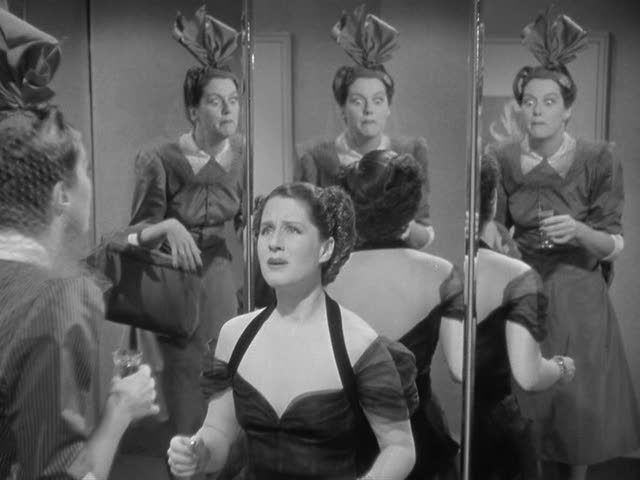
On one of the documentaries included in the DVD, Diane English gives a guided tour through the history of her relationship with the remake and why she wanted to do it in the first place. She thought it was a good story, but “women don’t act that way anymore” and the original’s “camp value” detracted from its social message. How can someone so passionate about a project miss the point so thoroughly? Many terrible remakes have been created by modern Hollywood to eliminate the so-called camp/antique feel of classic cinema. How is the original campy? Just because they wear big hats and yell occasionally? It’s truly ironic and sad that a female director and mostly female crew managed to be just as unfeeling and convoluted about the female role as everyone else in Hollywood these days.